






Interview with Kay John Yim

Hello CG World!
We would like to invite you to join us in a series of interviews conducted with CG Artists for your uplifting and motivation. If you have more questions, feel free to suggest. We hope you enjoy these interviews as we did.
The first of the series is an interview with Kay John Yim. A Chartered Architect by Day, and a CG Artist by night. “John” is a talented CG Artist-Architect born in Hong kong and based in London. he is a graduate from University of Bath and AA school of Architecture.
Q- How did you jump into the 3D industry, what was the story behind this decision?
Growing up in Hong Kong, I always have an extreme admiration for people working in the film and game industries, for all the surreal photographic and photo-realistic CG contents they produce.
I first learned about 3D back when I was studying architecture in University of Bath, where everyone had to present architectural concepts with abstract or Photoshopped renderings in addition to conventional 2D drawings. Softwares like Rhino, AutoCAD and Revit were essential tools of trade within the architectural industry, tools that I have been using for over 6,7 years until I struggled with the limitations of rendering packages available (for CAD/construction-oriented softwares). That was when I started to look into DCCs like Cinema4D and Houdini, which led to a whole new world of possibilities and options in CG rendering and modeling.
Having to spend more time at home due to the COVID lock-down in 2020, I challenged myself to learn 3D softwares and post weekly/bi-weekly CG art online, treating this as an opportunity to expand my portfolio and to find an audience that resonates with my style and interests.
Q- Did you have in mind your future career when you learned 3D, what was your vision and ambitions?
My interest in 3D originates from film and animation, so I always aspire to create CG animations with quality that rivals large studio productions in the long run. This seemed like a long shot (for a one-man band), but with technology advancing so quickly and becoming more accessible in the recent years – particularly in GPU rendering, Mocap technology and AI – it becomes slightly more tangible every year.
Q- Are you satisfied today with your current role or activities?
I am fortunate to be in a position where I have access to up-to-date hardware and software, and I do find satisfaction in 3D modeling and rendering; however I am never satisfied with the work that I produce – I am constantly looking for challenges to up my craft and efficiency.
Q- What inspires you the most to create your art. Do you have any motivational sources in your professional or personal life?
I try not to fixate on any source of inspiration as I find it more exciting to draw reference from a wide range of subjects, but one could certainly find traits of Japanese aesthetic in my personal projects. This is due to the fact that I am heavily influenced by Japanese culture. I really appreciate the wabi-sabi philosophy deeply rooted in the Japanese tradition, as well as the out-of-this-world narratives found in anime and manga.
Q- Do you think that softwares is the principal support of your work success or do you think that the artistic skills are more important ?
My artistic skills are the principal support of my work, particularly due to my experience in architecture and hence my obsession with proportions and details.
Although softwares plays a big role in my work, I am not “loyal” to any particular DCC or renderer. I am constantly editing my workflow and suite of softwares in search of more efficient ways to deliver final renders without compromising quality; in fact I have switched across 20+ softwares in the last 5 years.
Q- With increasing number of 3D artists in the CG industry, how do you feel rivalry working in this industry?
I did mostly CAD work in my early years of career – which is not really “3D art” per se – so the “3D industry” is still fairly new to me, and I do not see it as a rivalry.
I am trying my best doing what I enjoy doing – capturing and depicting my subjects of interest in CG as beautifully as I possibly could. For this reason I actually compare my work more to those of photographers’ than those of 3D artists’.
Q- Do you have any particular pipeline or workflow for storytelling, presentation, style.. that makes your work unique and different ?
I don’t have a particular agenda – my personal works are merely a reflection of my interest at a point in time, which could be a building, a specific plant or a particular art style that I came across and caught my attention. I simply recreate my subject of interest in 3D as the foundation, upon which I would implement characters, creatures or overgrown plants etc. to craft an interesting image.
“The Mirage Castle: a Fantasy War Tale”, for example, was inspired by the compositions and color palettes of Napoleonic romanticised war paintings. This is one of my few personal projects set in ancient times, where I intentionally referenced war paintings to create a painterly look as opposed to a photorealistic aesthetic.
-What is your favorite 3D work, could you talk about it showing some wip images and talk about its process ?
“Enchantment” – depiction of a Tuscan folklore – is my favorite 3D work so far. This piece marks a huge milestone in my 8 years of CG self-learning journey.
Having to spend more time at home due to the COVID lock-down last year, I set myself a goal to learn, create and post CG art online on a regular basis. I gradually progressed from creating CG architecture to landscape, creatures to human beings. “Enchantment” is my first personal project completed mostly procedurally. It is a culmination of a whole year of non-stop practice, a CG rendering that embodies every bit of my heart and soul.
The creation of “Enchantment”, like most of my personal projects, consists of primarily five steps:
1_researching
2_modeling
3_scene assembly/ set dressing
4_character modeling
5_rendering
I began by gathering as much reference images as possible and laid them all out on a PUREREF file – in this case the White Rotunda room in Sammezzno Castle, an Italian palazzo located in the town of Reggello, Florence.

I used Rhino & ZBrush to block-out and model ornamental modules, which would then be brought into Houdini for procedural modeling.
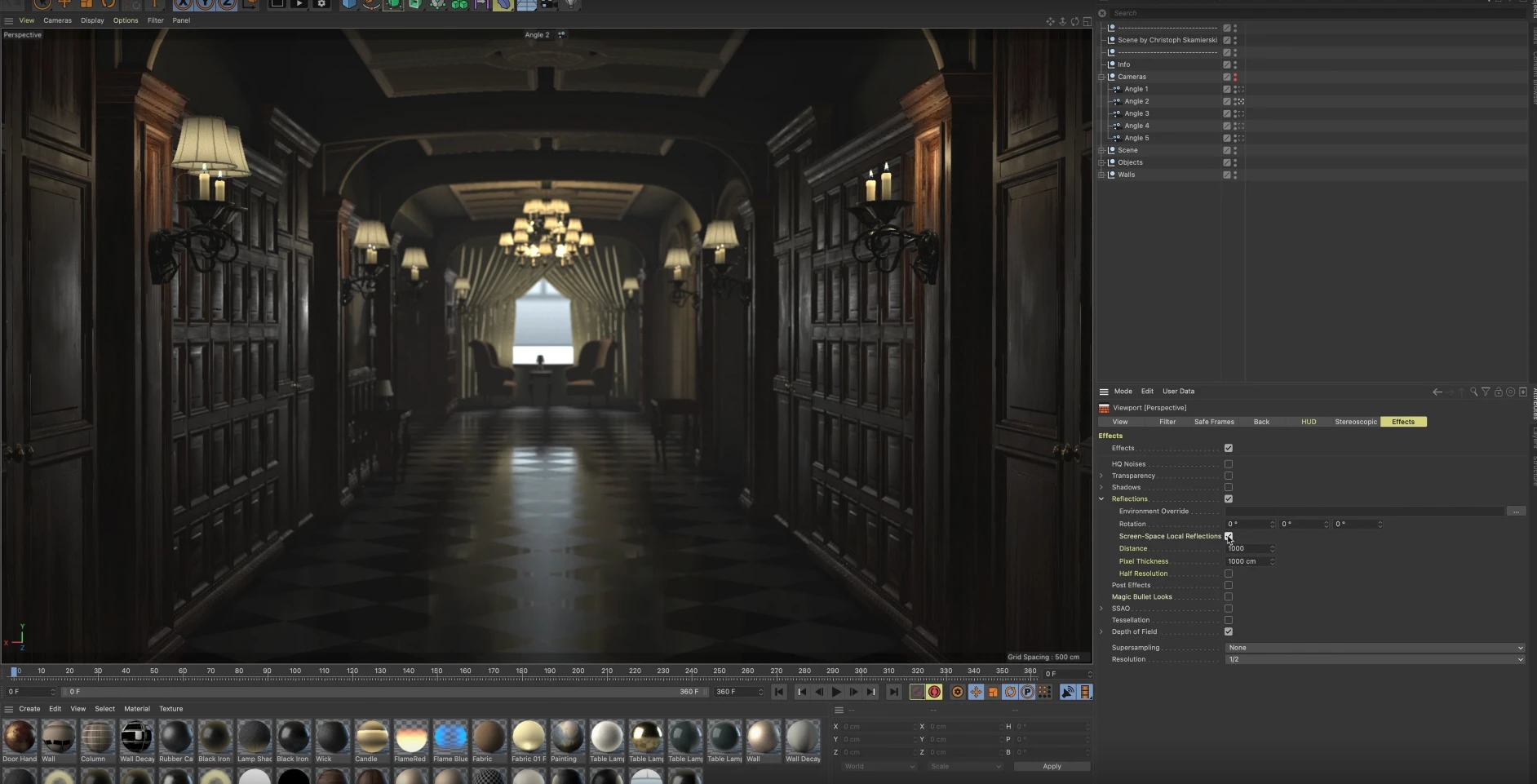
Scene assembly & set dressing was mostly done in Cinema4D – where I experimented with different camera angles, different framing and different lighting to find my favorite shots and compositions.
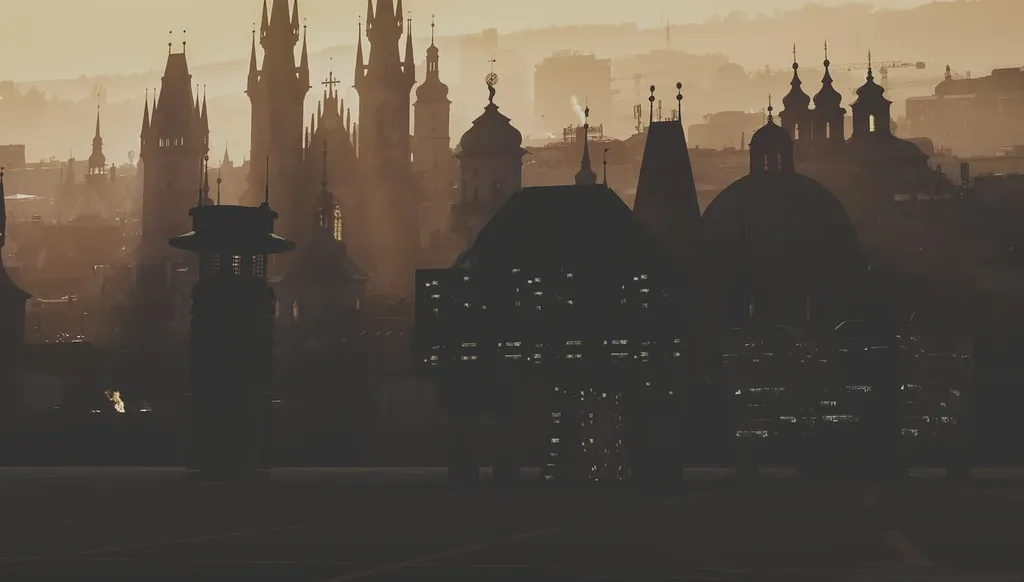
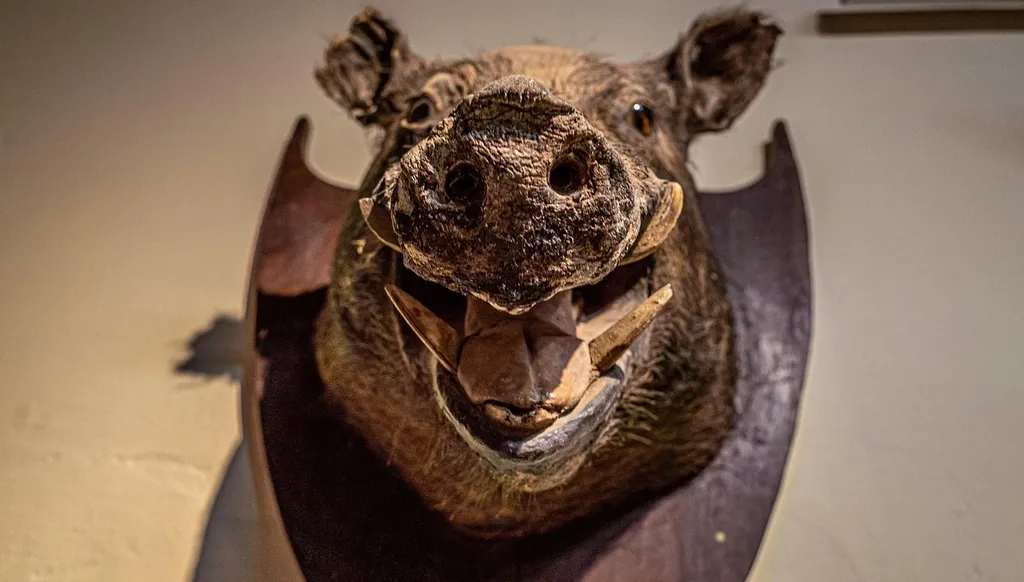
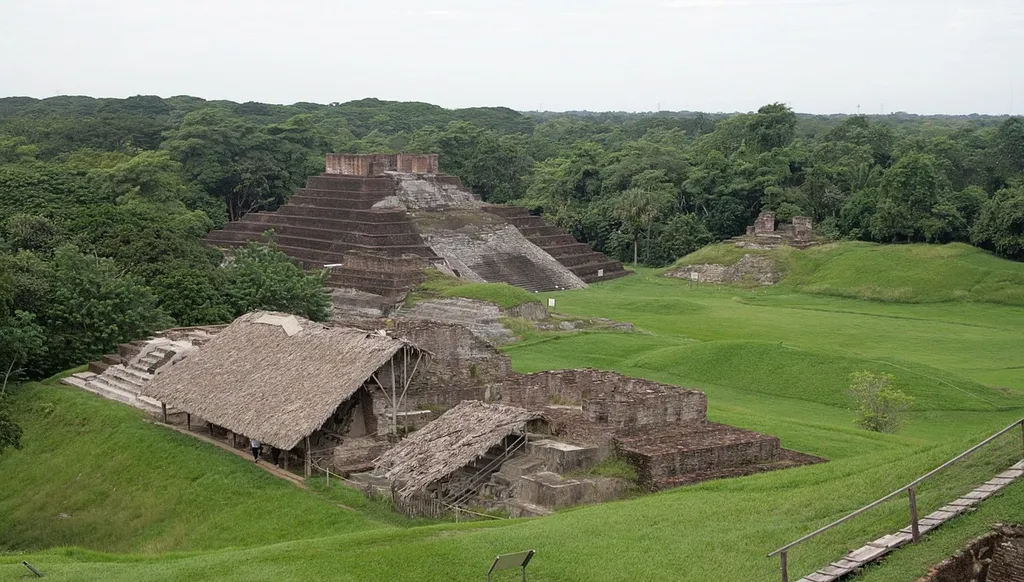
Once I was happy with a number of shots, I moved on to modeling & posing my characters in Character Creator in reference to real faces & poses, which was then exported to Marvelous Designer for fitting/designing the 3D garments. Both the characters and garments were eventually exported to Cinema4D.





The final step, which is also my favorite and I found the most enjoyable, is rendering in Redshift (Cinema4d/Houdini). It took me about 10 days of tinkering in colors, lighting and materials to arrive at the final render of “Enchantment”.

Q- Is there any innovation related to CG industry (SOFTWARE,PLUGIN,RENDER ENGINE, PLATFORM…), that you would like to see realised in the future?
Rendering speed is crucial to the number of design/render iterations that I could go through in a limited time-frame, and hence the ultimate quality that I could achieve at the end of the day. This is why I really look forward to advancements in real-time rendering, particularly real-time renderers within DCC hosts that rival the quality of traditional offline rendering. A more polished version of Blender’s Eevee or Redshift RT is the closest “ideal” real-time renderer in my mind.
Q- What is your advice for those who want to tackle this industry?
For beginners, I think that studying photography and cinematography rather than focusing on the technicality of 3D can definitely go a long way – 3D softwares are evolving so quickly these days anything could easily become obsolete tomorrow.
Beyond learning high level 3D concepts (UV/Nurbs vs Mesh etc.), I think one would learn 3D quicker by picking an interesting subject/object to replicate in 3D rather than watching tutorials. I initially gravitated towards the subject of architecture – as most buildings are basically “sweeps” and “extrudes” in aesthetically-pleasing proportions, it gave me the instant gratification and motivation to move onto more intimidating techniques later on (sculpting etc.).
Find him on social media:
https://johnyim.com/
https://www.instagram.com/k_johnyim/
https://www.facebook.com/jy.yimkay
https://twitter.com/k_johnyim
https://www.artstation.com/johnyim